About us
About TUN Foundation
TUN Foundation (“tun” means home in Armenian) was founded in 2024 to provide assistance to the people of Nagorno-Karabakh.
Our mission
The special mission of the foundation is to provide families displaced from Nagorno-Karabakh who are in need with permanent housing in Armenia and other necessary assistance. The strategic goal of the foundation is to contribute to the socio-economic development and prosperity of Armenia.
How we started
Initially, the idea of fundraising came from the private initiative of Mihail Veklenko, a professional urban planner with Armenian roots. In October 2023, after the exodus of Armenians from Nagorno-Karabakh, acting in cooperation with architects, lawyers, economists and activists based in Armenia, he launched a renovation and reconstruction program for shelters of displaced families. As a result, several shelters and houses were renovated and handed over to families.
Understanding the scale of the required support and the need for proper management of financial resources, the project initiators decided to take a more comprehensive and systematic approach. In effect, the private initiative led to the creation of TUN Foundation.
- October 2023. Private initiative: renovation of shelters for displaced families.
- 2024. TUN Foundation is registered in Armenia (April 2024).
- 2025. We launched our first public fundraiser and met the families on the land.
How we are organized
TUN Foundation is governed by a Board of Trustees. The director manages the foundation’s day-to-day work in Armenia.
Team
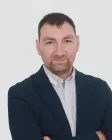
Mihail Veklenko
Founder and member of the Board of Trustees
Mihail Veklenko was born in Rostov-on-Don (then USSR) into an Armenian-Russian family. His maternal grandparents were ethnic Armenians who emigrated from Vedi (Armenia) and Isfahan (Iran).
He first graduated from Don State Technical University in International Economic Relations, and later obtained a Postgraduate Diploma in Urban Studies at the University of Manchester (UK).
His career began with a decade-long immersion in the intricacies of urban development: shaping urban landscapes and pioneering solutions in urban development, planning and urban science across towns, cities and regions in different countries, such as China, Brazil, India, Poland and Bulgaria.
He has lived in Croatia since 2020, where he runs MAVEK Design, a company he founded that year.
He always cherished his Armenian background, but his first visit to Armenia in 2014 made him realize how deeply he is attached to his historical homeland:
“Exploring Armenia helped me to explore myself. In particular, my first visit to Armenia opened my eyes: I understood where I come from and what culture I belong to. It turns out my mother passed the culture on to me, without even speaking Armenian. I simply felt at home.”
The exodus of Armenians from Nagorno-Karabakh in 2023 could not leave him unconcerned. He decided to take action, and his private initiative grew into TUN Foundation.
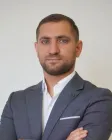
Harut Mnatsakanyan
Director
Harut Mnatsakanyan was born in the village of Avetaranots (Askeran district, Nagorno-Karabakh).
He holds a master’s degree in political science from Artsakh State University.
From 2010 to 2012, he served in the army in Nagorno-Karabakh.
From March 2014 to December 2017, he worked as the executive director of “Homeland’s Protector,” a youth-oriented NGO focused mainly on healthcare, as well as physical training and the self-development of young people.
From September 2017 to June 2018, he served as head of the Karvachar district administration. During his nine months in office, he implemented the government house-building program for young families and new residents, distributing local and government funds and financial support collected through charities equally. As a result, more than 20 new houses were built.
From June 2017 to July 2020, he worked as an adviser to the Minister of Nature Protection of Nagorno-Karabakh. During his service, two significant changes were made. First, the law on renewable energy was adopted, creating favorable conditions for producing and using solar, geothermal and other types of renewable energy. Second, state programs for waste recycling and biogas production were launched. He also worked as an adviser to the President of Nagorno-Karabakh and as an assistant to the head of the presidential administration.